
Order-to-Ship Assessment
What’s Slowing Your Orders Down?
Your orders are taking too long to ship. Customer due dates are being missed, production priorities keep changing, and your team spends too much time expediting orders instead of getting work done.
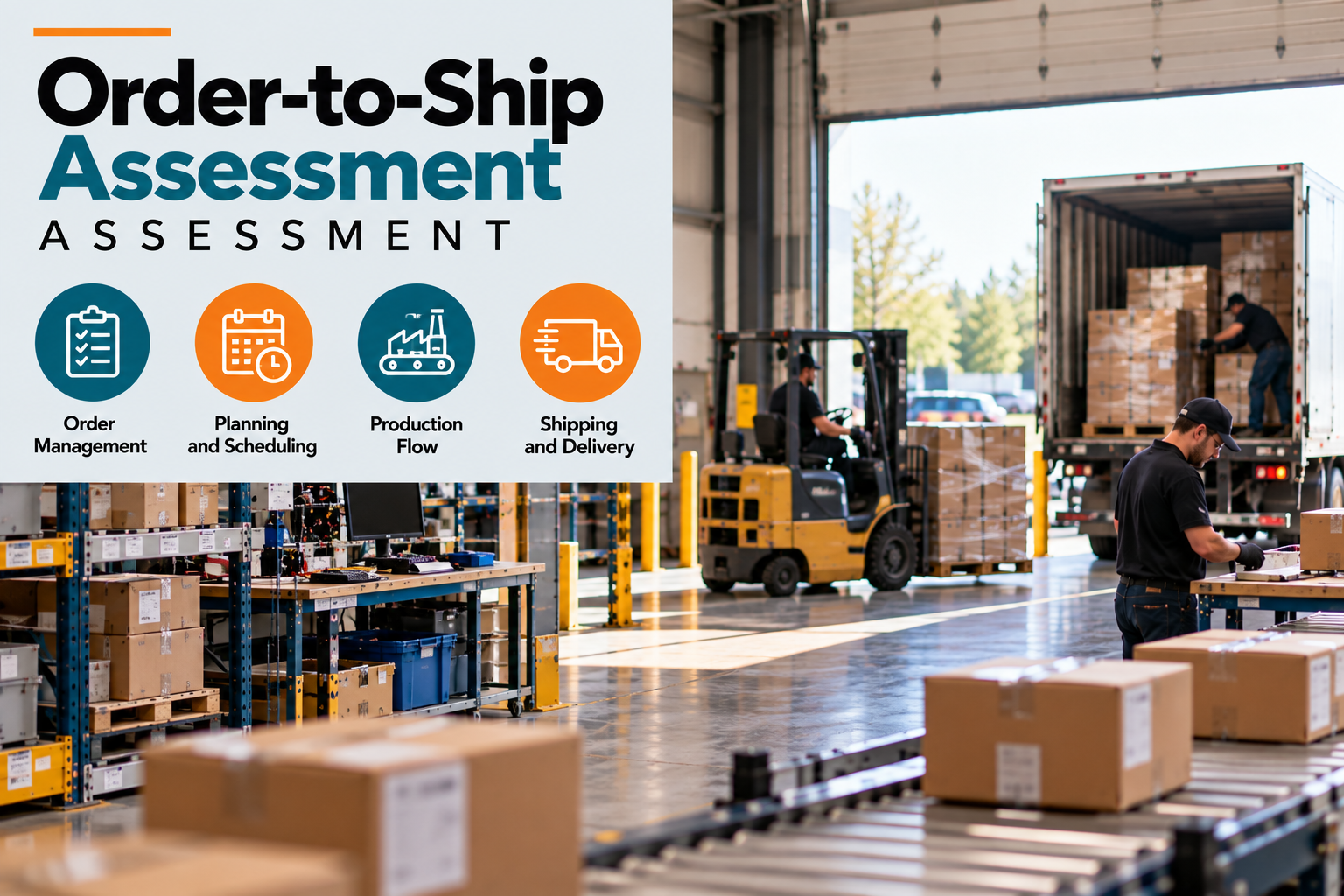
The Order-to-Ship Assessment follows work through your operation to uncover where time is being lost, identify the biggest causes of delays, and establish clear priorities for reducing lead times and improving on-time delivery.
Stop chasing orders. Start fixing what is slowing them down.
Sound Familiar?
-
- Orders routinely take longer than expected to ship
- Customer due dates are being missed
- Expediting and changing production priorities have become the norm
- Jobs spend too much time waiting for materials, information or the next process
- You know lead times are too long but aren’t sure what’s causing the biggest delays
Where Can You Improve?
The Order-to-Ship Assessment identifies opportunities to:
-
- Reduce Lead Times: Eliminate unnecessary waiting, delays, and interruptions throughout the order-to-ship process
-
- Improve Production Flow: Reduce bottlenecks, excessive work-in-process (WIP), and inefficient handoffs
-
- Improve Material Availability: Address shortages, replenishment delays, and material-related disruptions
-
- Strengthen Planning & Scheduling: Improve production priorities, coordination and the release of work
-
- Improve On-Time Delivery: Increase the reliability and predictability of order fulfillment
Built for Small and Mid-Sized Canadian Manufacturers
Lean Possibilities works with Canadian manufacturers that need practical improvements.
Recommendations are built around the realities of running a manufacturing plant: limited resources, customer commitments, production schedules and people who already have full-time jobs.
The objective is simple: Make the operation work better and create measurable business results.
How the Assessment Works
1. Assess the Order-to-Ship Process
Review order fulfillment challenges, customer commitments, lead times, scheduling practices, and performance data. Follow work through the operation to identify where orders wait, stop, or experience delays.
2. Identify the Opportunities
Identify and quantify opportunities to reduce waiting, eliminate bottlenecks, improve material availability, streamline production flow, and shorten lead times.
3. Prioritize What to Fix
Evaluate opportunities based on potential impact, effort, and practical feasibility to create a prioritized 90-day improvement game plan.
What You Get
Clear Picture of Order-to-Ship Performance
Understand where orders are losing time, what’s causing delays and the underlying issues affecting lead times and on-time delivery.
Quantified Lead Time Reduction Opportunities
Understand the potential impact of improvements in hours, days, dollars, and other meaningful performance measures, supported by available data.
Quick Wins
Identify practical improvements that can reduce delays and improve order flow immediately without major investments or lengthy capital projects.
90-Day Improvement Game Plan
Get a prioritized action plan outlining what to tackle first, where to focus your resources and how to start reducing lead times and improving on-time delivery.
Order-to-Ship Assessment Investment
$7,800 + applicable taxes and travel expenses
The Order-to-Ship Assessment includes:
-
- One Day On-Site: An objective review of your order-to-ship process, production flow, planning, materials, and available performance data.
-
- Assessment Findings: Identify the underlying causes of delays, biggest lead time reduction opportunities, and what needs to change.
-
- Quantified Opportunities: Understand the potential financial impact and ROI of recommended improvements, supported by available data.
-
- 90-Day Improvement Game Plan: A prioritized, actionable plan outlining what to tackle first and where to focus your resources.
-
- Results Within One Week: Receive your assessment findings and game plan within one week, provided all requested data is available.
Stop chasing orders. Get a clear plan to reduce lead times and improve delivery performance.